
Mar 13th 2026
CS-001: Pulse MIG Performance — When Anti-Spatter Chemistry Matters
Arc-Zone® Case Study
Jim Watson (AKA Joe Welder)
CEO & Founder, Arc-Zone.com
Product Innovator | Director of Manufacturing | U.S. Patent Holder
Technical Author | Trade Publication Contributor | eCommerce Pioneer
Arc-Zone® | Technical Leadership. Proven Shop-Floor Results
Executive Summary
In high-heat welding processes, small material variables become amplified. During active Pulse MIG fabrication, Arc-Zone ProPartner Wes Mishler evaluated Safe Green Anti-Spatter after experiencing inconsistent first-pass weld behavior with a previously used product.
This case study documents real-world shop observations under demanding Pulse MIG conditions and examines how anti-spatter chemistry can directly influence arc stability, burn-off behavior, and overall welding consistency.
Application Context
- Process: Pulse MIG
- Environment: Enclosed fabrication shop
- Focus: First-pass stability, nozzle fouling, burn-off behavior
Pulse MIG increases heat input and arc responsiveness. Under these conditions, surface coatings applied to the workpiece or nozzle can influence arc behavior during the initial weld pass.
The Observed Issue
With the previously used anti-spatter spray, the first weld immediately following application ran rough until the coating burned off. Arc behavior stabilized only after this initial phase, requiring operator correction.
As noted during evaluation:
“Using the other kind it made the first weld after applying it run very rough until it burned off.”
In Pulse MIG applications, where arc consistency is critical, even brief instability affects process smoothness and productivity.
Prior Field Experience — Conex Container Welding
During follow-up discussion, Wes referenced previous fabrication work welding Conex shipping containers under extreme summer conditions.
Inside enclosed steel containers, ambient heat accumulates rapidly. Under those circumstances, traditional anti-spatter sprays produced heavy smoke during burn-off, compounding already elevated working temperatures.
While environmental compliance was not the primary factor in the current evaluation, burn characteristics and smoke behavior become operationally significant in confined, high-heat environments. Product chemistry directly affects operator comfort and visibility during initial weld passes.
Evaluation of Safe Green Anti-Spatter
Safe Green Anti-Spatter was evaluated during active Pulse MIG fabrication.
Observed differences included:
- Smoother first weld following application
- No noticeable rough burn-off phase
- Longer intervals between reapplication
- Reduced nozzle fouling
- More consistent welder performance during high-heat runs
No regulatory requirement drove the product change. Performance under high-heat Pulse MIG conditions was the determining factor.
Visual Documentation
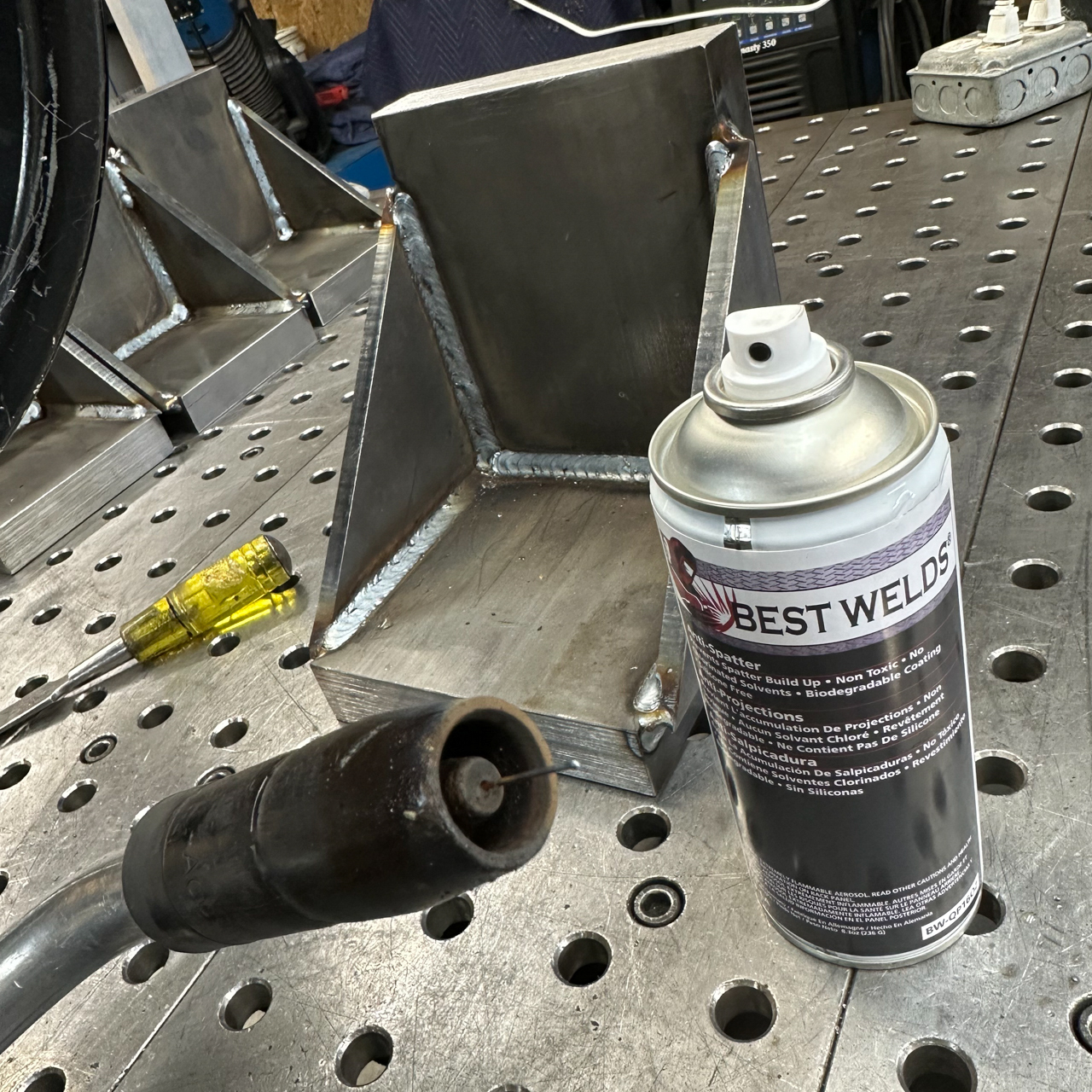
Before
After
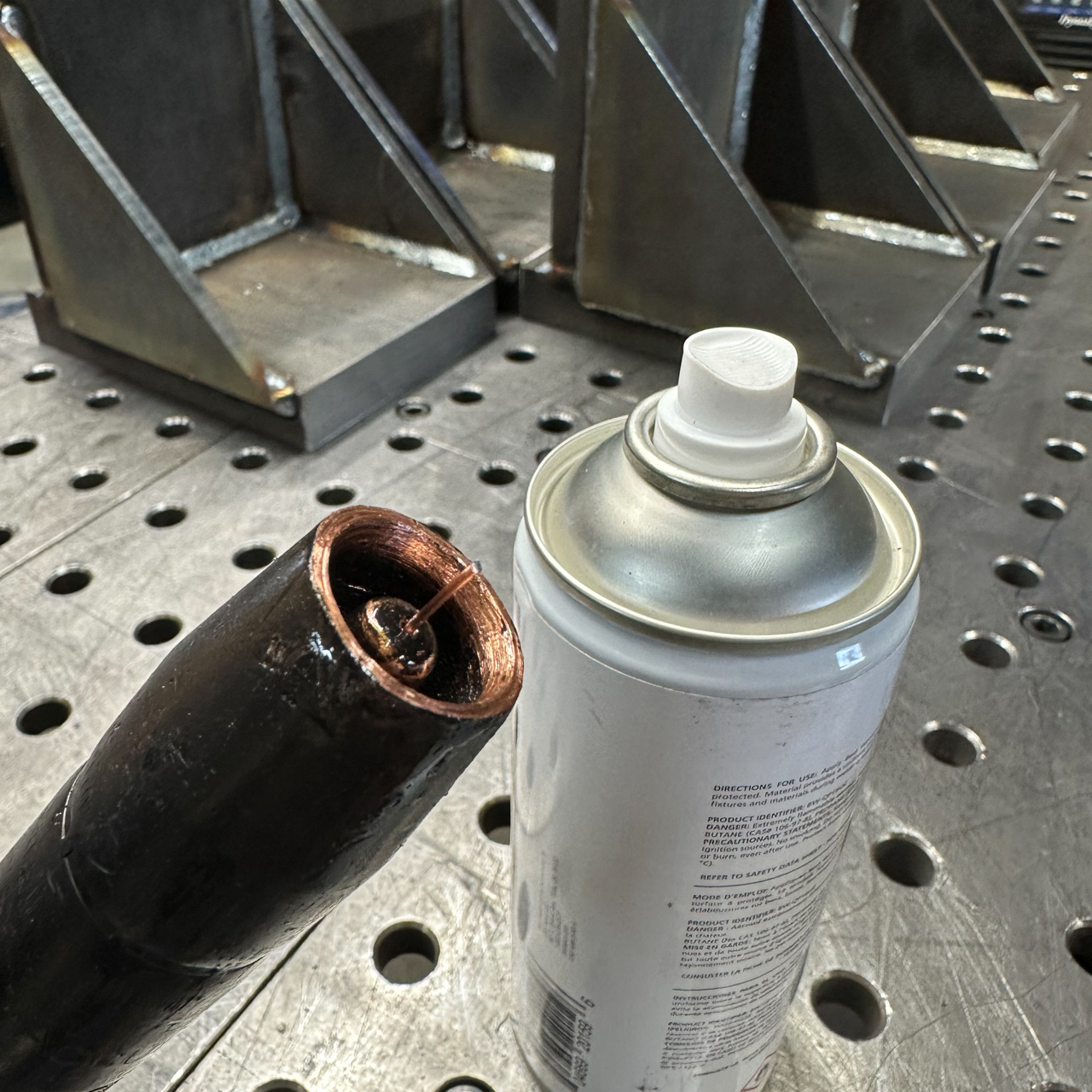
Field images captured during fabrication show:
- Typical Pulse MIG nozzle conditions
- Clean internal copper surfaces following use
- Structural weldments completed under production settings
Observations were recorded during active shop work, not staged testing.
Operational Impact
In high-heat Pulse MIG applications, anti-spatter performance directly influences:
- First-pass arc stability
- Nozzle fouling frequency
- Burn-off behavior
- Operator consistency during extended runs
Under these conditions, product chemistry becomes a performance variable rather than a convenience factor.
CS-001 documents a measurable refinement in process stability achieved through informed product selection under real fabrication conditions.
Product Reference
Conclusion
In advanced welding processes such as Pulse MIG, consumable chemistry matters. Minor variables influence arc behavior, heat response, and overall process stability.
When evaluated under real production conditions, Safe Green Anti-Spatter demonstrated improved first-pass smoothness and greater operational consistency.
Arc-Zone® remains committed to documenting practical fabrication insights that improve measurable shop-floor performance.


